

10 Questions to Ask Enterprise Demand Gen Agencies
Key Takeaways
- Because many enterprise demand generation agencies list similar services, evidence tends to separate them better than the pitch.
- These ten questions can help enterprise teams check whether an agency connects strategy to revenue, runs an enterprise HubSpot setup, and aligns marketing, sales, and RevOps.
- Proof such as named examples, real numbers, and case studies usually says more than general platform claims.
- Useful measurement generally separates activity, such as clicks and form fills, from pipeline influence and revenue.
- It often helps to confirm who owns each integration, what the agency owns versus the internal team, and how the program improves after launch.
- The scorecard can support a comparison, though the total works best as a guide backed by references rather than an automatic winner.
Table of Contents
1. How will you connect demand generation strategy to revenue goals?
2. What experience do you have with enterprise HubSpot environments?
3. How will you assess our existing CRM and marketing automation setup?
4. How will you align marketing, sales, and RevOps?
5. How do you manage data quality and governance?
6. How do you build lead scoring, routing, and lifecycle management?
7. How will you measure campaign performance and pipeline influence?
8. How will you integrate HubSpot with the rest of our technology stack?
9. What will your agency own, and what will remain with our internal team?
10. How will you improve and scale the program after launch?
Introduction
Ask three enterprise demand generation agencies what they do, and the answers can sound the same: campaigns, leads, and reporting. The gap tends to show up later, when one agency can run a complex HubSpot setup, keep data clean, and tie activity to revenue, and another cannot.
These ten questions can help enterprise teams tell the two apart before signing. Much of the risk usually sits below the campaign layer, in HubSpot architecture, marketing automation, data governance, lead handoffs, reporting, and integrations. Each question below sets out what a clear answer may sound like, what a weak answer often reveals, and what proof to request, alongside the revenue operations an enterprise already runs.
How will you connect demand generation strategy to revenue goals?
A clear answer usually connects demand generation strategy to pipeline and revenue, not just activity. Strong agencies tend to map campaigns to ideal customer profiles, target accounts, and the buying committee, then trace that work through to closed revenue.
What a strong answer covers:
- Business goals and pipeline targets
- Ideal customer profiles and target accounts
- The buying committee and its priorities
- Campaign priorities and sequence
- Revenue attribution, and its limits
- The link between activity and closed deals
Warning sign: A reply that centers on lead volume alone often points to top-of-funnel thinking.
Proof to ask for: Enterprise buying is rarely one person. Gartner describes a typical buying group for a complex purchase as six to ten decision makers, and Forrester has put a considered purchase at around 27 interactions before a decision. An agency that can tie a past campaign to a named pipeline stage and a target-account list is usually planning for revenue.
What experience do you have with enterprise HubSpot environments?
A capable HubSpot demand generation agency tends to show enterprise-scale work, not general familiarity. The clearest examples usually involve several business units, large databases, custom objects, and strict permissions.
What a strong answer covers:
- Several business units or brands
- Large contact databases
- Strict permission and access rules
- Custom objects and multiple pipelines
- Enterprise integrations
- Governance and documentation
- Knowledge of HubSpot tiers, features, and implementation services
Warning sign: General platform claims, with no comparable enterprise example, can be a sign the work has stayed small.
Proof to ask for: A HubSpot consulting partner with Elite accreditation can point to comparable work. Vonazon’s project building a unified revenue engine with Salesforce and HubSpot, for example, shows how data from more than one system can run inside a single enterprise setup.
How will you assess our existing CRM and marketing automation setup?
A strong answer usually starts with a review of the current portal before proposing new work. That review tends to cover lifecycle stages, workflows, lead scoring, data quality, and reporting.
What a strong answer covers:
- Portal structure and account setup
- Lifecycle stages and workflows
- Lead scoring and forms
- Data quality and campaign tracking
- Integrations and reporting
- Old, unused, or conflicting automation (technical debt)
Warning sign: A marketing automation agency that jumps straight to campaigns, without reviewing the enterprise marketing automation already in place, can end up building on shaky ground.
Proof to ask for: For example, an audit might find two workflows setting the same property in different ways, which quietly breaks a report. A HubSpot audit and health check can surface issues like this, and because the existing CRM architecture and configuration tends to shape what is realistic, a review of it usually comes first.
How will you align marketing, sales, and RevOps?
A strong answer usually describes shared definitions, lead acceptance rules, and clear handoffs, not just a promise to collaborate. Marketing and sales alignment tends to depend on agreed criteria and a feedback loop between teams.
What a strong answer covers:
- Shared definitions and lead acceptance criteria
- A service-level agreement (SLA) for response and follow-up
- Clear handoffs and follow-up steps
- A feedback loop from sales back to marketing
- Shared reporting and named owners
Warning sign: For example, marketing counts a webinar signup as qualified, sales disagrees, and the record sits untouched for two weeks.
Proof to ask for: Vonazon’s look at why CRM and RevOps fall out of alignment describes how these gaps tend to form. Agencies that offer revenue operations consulting alongside campaigns can often help close them.
How do you manage data quality and governance?
A strong answer usually treats governance as an ongoing habit, not a one-time cleanup, with clear rules and a named owner. Clean data, sometimes called CRM data governance, tends to be what keeps reporting trustworthy.
What a strong answer covers:
- Required fields and naming rules
- Duplicate handling and data enrichment
- Record ownership and access controls
- Data retention and documentation
- Who owns governance day to day
Warning sign: For example, one duplicate company record can split a single account across two dashboards, so pipeline looks smaller than it is.
Proof to ask for: Tools such as a HubSpot Data Hub can help with deduplication and monitoring, though the habit usually matters more than the tool.
How do you build lead scoring, routing, and lifecycle management?
A strong answer usually separates fit from engagement and defines each stage clearly. HubSpot lead scoring tends to work best when it blends fit, behavior, and negative scoring, with written rules for MQL and SQL.
Definitions: An MQL is a lead marketing considers ready; an SQL is one sales has accepted for direct contact.
What a strong answer covers:
- Fit, engagement, and negative scoring
- Written MQL and SQL definitions
- Routing rules and suppression
- Recycling and nurture for not-yet-ready leads
- A regular review to recalibrate scores
For example, negative scoring can filter out a student email or a competitor domain before it reaches a rep. Scoring built in Marketing Hub tends to work only when the definitions are shared and reviewed. The table below sets out what to ask for, next to the answers that can signal weak lead management.
Evaluation Area | What to Ask For | Possible Warning Sign |
|---|---|---|
Lead scoring | Documented fit and engagement criteria | Scores based only on email opens |
Routing | Clear ownership and fallback rules | Leads can sit unassigned |
Lifecycle stages | Shared stage definitions | Different teams use different definitions |
Suppression | Exclusion and disqualification criteria | Most contacts enter the same nurture |
Review process | Scheduled performance reviews | Scoring is rarely recalibrated |
How will you measure campaign performance and pipeline influence?
Strong HubSpot reporting usually separates engagement metrics from revenue ones. A capable agency tends to split sourced pipeline from influenced pipeline, name the limits of attribution, and say who owns each dashboard.
What a strong answer covers:
- Campaign results and the limits of attribution
- Sourced and influenced pipeline
- Conversion rates, lead velocity, and sales acceptance
- Cost per opportunity and revenue contribution
- Dashboard ownership and consistent definitions
Warning sign: Reporting that stops at clicks and form fills often describes activity, not impact.
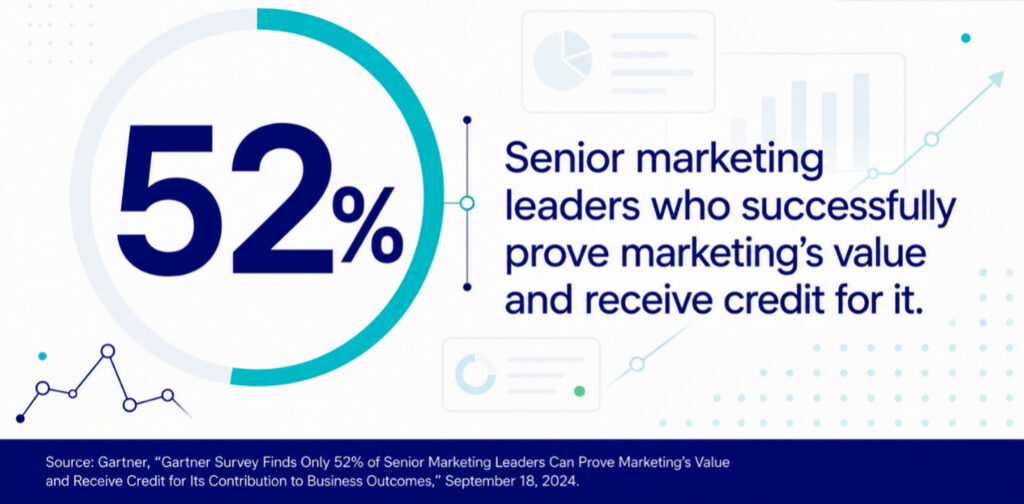
Proof to ask for: Measurement is hard even for large teams. Gartner found in 2024 that only 52% of senior marketing leaders could prove marketing’s value and get credit for it. Clear reporting, helped by custom HubSpot reports and templates, can give leaders a fuller picture.
How will you integrate HubSpot with the rest of our technology stack?
A strong answer usually treats each integration as something owned and monitored, not connected once and forgotten. That means covering field mapping, syncing, error alerts, and recovery across CRM, support, ads, and data tools.
What a strong answer covers:
- CRM, ERP, and support connections
- Ad platforms and data warehouses
- Webinar and event tools
- Who owns each integration and its syncing
- Error alerts, field mapping, and recovery
Warning sign: Gaps here tend to surface later as duplicate records, broken reports, and manual cleanup.
Proof to ask for: Vonazon’s Zendesk-to-HubSpot migration shows how support and CRM data can be merged without losing history. In a related HubSpot CRM migration, one painting company unified six markets in a single portal, moved 99% of reviewed contacts, and surfaced more than 300 mismatched records before they reached reporting.
What will your agency own, and what will remain with our internal team?
A strong answer usually draws clear lines: what the agency owns, what stays internal, and what is shared. Clear boundaries around strategy, execution, admin, reporting, and documentation can prevent confusion later.
What to pin down early:
- Strategy, planning, and content
- Automation, reporting, and data
- Technical admin and approvals
- Sales enablement, documentation, and training
The split usually fits the internal team’s size and skills, rather than a fixed template. The table below shows one way to divide the work, which teams can adapt.
Workstream | Agency Responsibility | Internal Responsibility | Shared Responsibility |
|---|---|---|---|
Strategy | Define proposed approach | Confirm priorities | Approve roadmap |
Campaign execution | Build and optimize campaigns | Supply subject-matter expertise | Review performance |
HubSpot administration | Complete agreed technical work | Maintain access and security | Govern changes |
Reporting | Build reporting framework | Validate business definitions | Review results |
Documentation | Document delivered processes | Maintain internal policies | Update operating procedures |
Proof to ask for: The right split usually depends on how much the internal team can carry. Vonazon’s guide to the signs you need a RevOps CRM implementation partner can help weigh that.
How will you improve and scale the program after launch?
A strong answer usually describes a repeatable cycle, not a launch and handoff. It tends to include a testing cadence, regular reviews, and recalibrated scoring, backed by documentation and training the internal team can use.
What a strong answer covers:
- A testing cadence and regular reviews
- Workflow tuning and score recalibration
- Updated documentation and team training
- Expansion into new markets, with change management
- HubSpot adoption and ongoing governance
Warning sign: Scores set at launch tend to drift as the market shifts, so a program with no recalibration plan can quietly lose accuracy.
Proof to ask for: Adoption often decides whether a program compounds or stalls, which is why HubSpot training and adoption tends to come with lasting results. Vonazon’s look at why HubSpot often goes underused describes how capability slips when adoption lags.
Enterprise Agency Evaluation Scorecard
The scorecard can turn the ten questions into a simple comparison. Each agency can be scored from 1 to 5 on the evidence it gives, then multiplied by the weight for a weighted score. Weights can be adjusted to fit the team’s priorities. A team worried about integrations, for example, might weight technology and integrations higher than strategy.
The total works best as a guide rather than a verdict. A high score can be a reason to run reference checks and scope conversations, since evidence quality, fit, and delivery risk also shape the right call.
Evaluation Category | Suggested Weight | Agency Score: 1-5 | Weighted Score |
|---|---|---|---|
Revenue strateg | 15% | 4 | 12% |
Enterprise HubSpot experience | 15% | 5 | 15% |
Technology assessment | 10% | 4 | 8% |
Marketing, sales, and RevOps alignment | 10% | 3 | 6% |
Data governance | 10% | 4 | 8% |
Lead management | 10% | 4 | 8% |
Reporting and attribution | 10% | 3 | 6% |
Integrations | 10% | 4 | 8% |
Responsibility model | 5% | 5 | 5% |
Continuous optimization | 5% | 4 | 4% |
Total | 100% | _ | 80% |
Weighted Score = (Score ÷ 5) x Weight
Conclusion
The real question is simple: can the agency support the whole revenue system, or only run campaigns? Can it connect strategy to revenue, work inside an enterprise HubSpot setup, keep data clean, and get marketing, sales, and RevOps working from the same definitions? A B2B demand generation agency that answers these with evidence is usually describing how it works, rather than selling a pitch.
The same themes run through all ten questions: strategy, HubSpot architecture, data, governance, reporting, integrations, ownership, and steady improvement. Judging an agency on all of them, rather than campaign output alone, can show who is more likely to keep the program running as it grows.
Frequently Asked Questions
What should enterprises look for in a demand generation agency?
Enterprises can look for evidence across strategy, technology experience, governance, reporting, integrations, and execution. A capable agency usually connects campaigns to revenue, works inside complex HubSpot setups, keeps data clean, and defines clear ownership. Proven work in a comparable environment, shown in case studies such as scaling precision marketing across product lines, often says more than a general service list.
Specific examples, documented processes, and reporting that ties activity to pipeline can all help. Agencies that can only describe campaign tactics tend to struggle with the system complexity and cross-team coordination that enterprise programs need.
How is an enterprise demand generation agency different from a campaign agency?
The difference usually shows in scope, system complexity, alignment, data needs, and accountability. An enterprise agency tends to work across business units, complex HubSpot architecture, and several teams, while a campaign agency often focuses on execution within a narrower remit. The distinction is common, though not universal, so each agency is best judged on evidence.
Some campaign agencies build enterprise skills over time, and some large agencies still work at a campaign level. A more reliable test is usually whether the agency can run the wider revenue system, rather than the label it uses.
Why does HubSpot experience matter when selecting a demand generation agency?
HubSpot architecture, workflows, lifecycle stages, integrations, and reporting all tend to shape what an agency can execute. An agency fluent in enterprise HubSpot can set up scoring, governance, and reporting correctly, while limited experience often leads to misconfiguration and rework. For example, migrating from Salesforce to HubSpot without losing history usually depends on that kind of platform depth.
Because these settings are connected, small errors can compound. Examples of comparable enterprise HubSpot work can help confirm an agency can operate at the required scale, rather than only inside a small portal.
What questions should we ask a HubSpot demand generation agency?
The highest-leverage areas usually include how the agency connects strategy to revenue, its enterprise HubSpot experience, how it reviews the current setup, how it aligns marketing, sales, and RevOps, and how it manages data governance. Lead management, measurement, integrations, ownership, and post-launch improvement can round out the picture.
These questions map to the framework above. Prioritizing the ones tied to known risks, such as reporting accuracy or integration stability, can keep the evaluation focused on the organization’s specific environment.
How should enterprises compare demand generation agency proposals?
A consistent set of criteria usually helps: weighted scoring, relevant experience, responsibility boundaries, expected outcomes, and supporting evidence. A scorecard can make trade-offs visible and reduce reliance on presentation quality. Independent proof, such as client success stories, can add useful context alongside the proposal.
Scores tend to work best as inputs to a broader decision that also weighs reference checks, delivery risk, and cultural fit. The aim is usually a defensible comparison, rather than a single number that decides the outcome.
Should an enterprise demand generation agency also support RevOps?
It depends on the organization’s needs, technology complexity, handoff problems, reporting requirements, and internal skills. Teams with fragmented data, disputed definitions, or shaky reporting often benefit when an agency supports revenue operations and ongoing HubSpot administration and support alongside demand generation. Teams with strong internal RevOps may need less help and clearer boundaries instead.
The right answer usually follows from the current setup. Where alignment and reporting are already breaking, combined support tends to help, while a mature internal team may prefer a more focused engagement.



A short evaluation can show the gaps across systems, data, processes, and reporting that shape what any agency can deliver.